If you deal with commercial residential or commercial properties enough time, you find out the variation in between a negotiation trouble and a lateral action trouble. Piece heaves, stair-step gaps, and hanging beam of lights predict one story. Stooped cellar walls, leaning elevator shafts, and also retaining constructs slipping toward a road inform one more. Helical tieback anchors reside in that second tale. They are actually the workhorse for standing up to side lots where digging is actually restricted, dirts are unstable, or velocity as well as get access to constraints make conventional options impractical.
I learned this by hand on a 1960s office complex along with a brick front and a basement that open up to a loading dock. The dock wall surface had been actually patched a dozen times. Every wintertime the tuckpointing failed, as well as every spring the wall surface leaned a little much more. Excavating 10 feets rich alongside energies and a busy street was a nonstarter. Helical tieback anchors solved it precisely: minimal interruption, a predictable capacity, and a service warranty I could possibly stand behind. Since then, I look for helical tiebacks whenever lateral restraint is the governing issue in the course of commercial groundwork stabilization.
What a helical tieback anchor in fact does
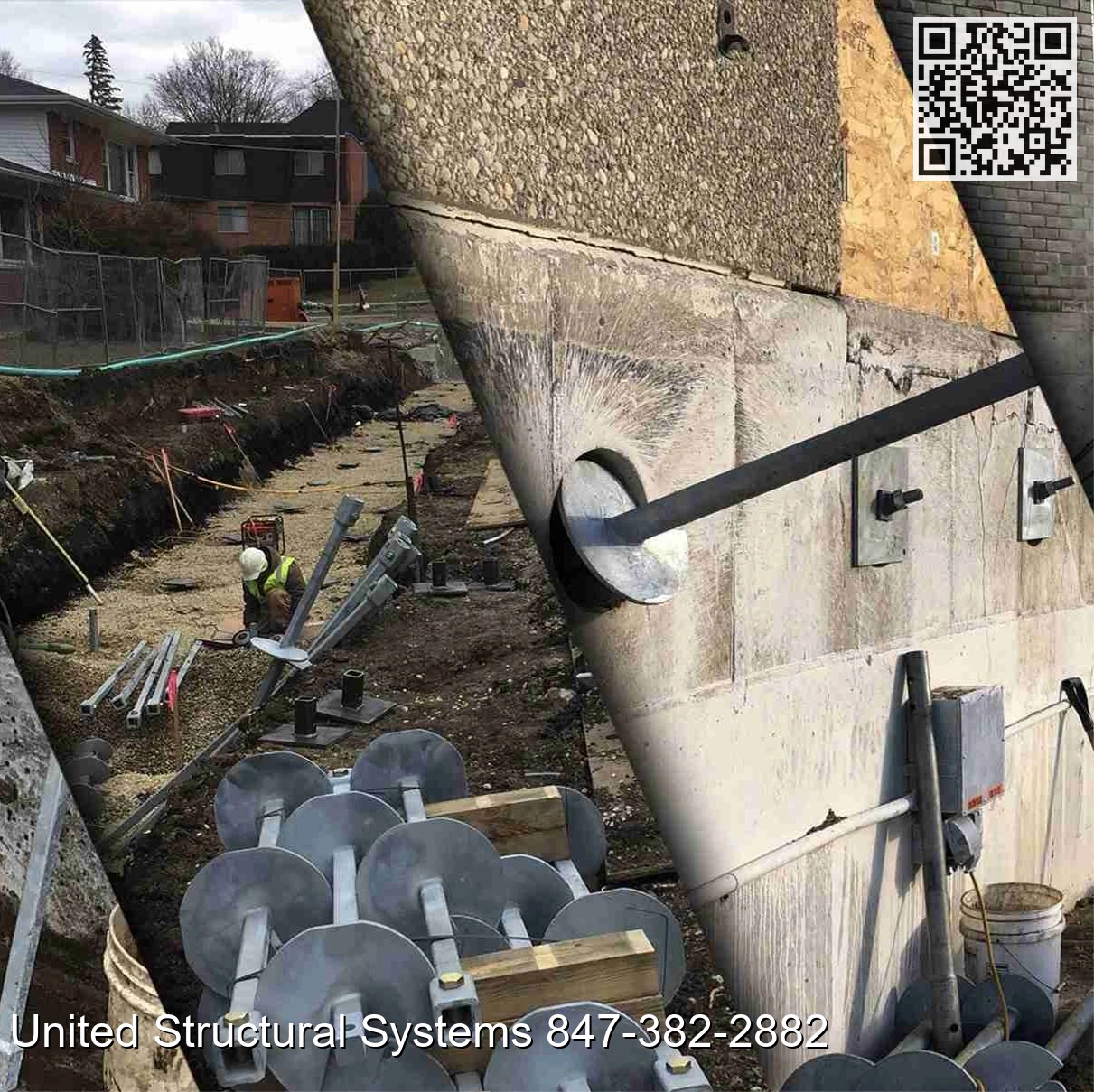
Despite the title, a helical tieback is actually not a pile in the upright feeling. Think of it as a steel tendon with helical plates that screws flat or at a shallow up slant right into proficient ground or weathered stone, at that point obtains latched off to a wall, delaying, or even grade beam. The helixes develop central ability by means of end-bearing and rubbing along the shaft. The "tieback" section is the stress taken up between the support head and also the supported structure.
Unlike grouted rock anchors that ask for drill-and-grout patterns as well as healing opportunity, a helical tieback supplies prompt load with torque-to-capacity connection. Along with calibrated setup, you validate ability as you go. That confirmation is actually a significant factor these anchors have actually ended up being a staple in commercial foundation repair and structural foundation repair where routines are tight.
Situations that require helical tieback anchors
The clearest usage situations share a design: sidewise earth pressures or even hydrostatic stress that go over a structure's protection, however without area, spending plan, or even time for major excavation or even cast-in-place countermeasures.
Retaining constructs that can easily certainly not sneak any even more. Our team often install helical tiebacks on preserving walls beside public rights-of-way, car park decks, or even building lines where digging would close down web traffic or violate easements. Tiebacks put up from the inside face of the wall structure solve this neatly. Style normally targets earth tension at-rest or even active-plus-surcharge, with necessary load factors.
Basement as well as below-grade walls presenting inner variation. Inclined or trimmed CMU, broken cast-in-place wall surfaces, and also spandrel beam hardship suggest lateral overload, certainly not settlement. Helical tieback installment with wall structure cores, blended along with indoor walers or platters, can easily stabilize the wall structure and, in many cases, recoup a part of deflection.
Temporary shoring for diggings and also additions. For office expansions or power hallways, helical tieback anchors pair with soldier heaps or piece heaps to keep back decreases while foundations are mounted. Professionals favor all of them since there is no grout treating problem, and also a little crew with mobile equipment can easily function in cramping urban lots.
Seawalls as well as waterfront retaining walls. Timber or even steel bulkheads lose section over time. Changing deadman anchors along with helical anchors, commonly tilted to reach underneath secure upland grounds, recovers ability without tearing up promenades or landscape design. Oxidation security and proper hot-dip galvanizing ended up being necessary near saltwater.
Brick or even stone exterior stablizing over areaways as well as passages. In heavy downtown hallways, gaps under sidewalks and shallow passages complicate excavation. Helical tiebacks may be cast to bypass deep spaces and also secure right into skilled strata, then attached to a new lintel or indoor frame.
In each instance, the worth lies in propelling strain ability versus sidewise pressures while keeping disruption low. That is different coming from commercial helical pile installation or commercial resistance pile installation, which target upright bunch assistance. Helical tiebacks assist wall structures and excavation systems; helical piles as well as resistance heaps sustain columns, slabs, and level beams.
When helical tiebacks are actually the inappropriate tool
They are not an universal remedy. Poor applicant problems consist of extremely dense cobble layers that decline seepage, extensive stones, or strongly corrosive dirts without an engineered oxidation plan. If the wall is actually actually at the verge of crash along with crushed units and also inadequate birth control activity, tiebacks alone can easily certainly not wait; you might need to restore and integrate steel frameworks. Where resonance constraints are excessive, also the moderate power from a ride motor could be a concern, although this is rare.
Where the concept requires remarkably higher individual capabilities, like singular anchors over 150 to 200 kips in stress, micropiles with case and cement light bulb or even punched rock supports may be actually much more money-saving each capability. For temporary shoring where demilitarizing will certainly be required, dirt nails or grouted anchors can exceed in unit expense, especially on sizable repeated runs with straightforward access.
Reading the ground, not only the drawings
Most specifications hinge on evident the planet pressure representations and factored loads. Those matter, however excellence holds on stratigraphy. Helical anchors need to have a proficient bearing coating for the coils. In gentle clay-baseds, our team upsize the coil diameter as well as boost the number of plates, but the design has to still provide appropriate embedment beyond the active wedge. In sands, we expect liquefaction potential and also drain pathways. In layered accounts, it prevails to skip a silty seam and try for the dense sand at 18 to 25 feets for trusted twist correlation.
On a medical facility improvement in frosty till, we predrilled captain gaps by means of a 6-foot cobble band to get to the heavy source below. Predrill performs not kill capability if the coils still nibble in to undisturbed material at the layout depth, however it requires mindful torque tracking and, in some cases, a changed Kt (the torque connection consistent) based upon field proof tests.
How helical tiebacks review to various other support as well as pile systems
Owners and engineers typically ask whether they must use helical piles, resistance piles, micropiles, or tieback anchors. The answer flows coming from the tons direction and also constructability constraints.
Commercial helical pile installation as well as resistance pile installation deal with vertical payloads and also settlement deal command. Helical piles, with their helical plates, master clays and also mixed soils, could be put up with reduced noise as well as vibration, as well as give immediate ability. Protection piles, or even press stacks, build capability through mounting steel heaps against the establishment, removing soil instead of eliminating it. They are useful for underpinning when headroom is tight and also when the existing establishment may serve as a response to drive the piles.
Micropiles, typically steel studying with grouted cores, sparkle in extremely heavy dirts or even stone, along with higher allowed bunches and flexibility for both pressure and squeezing. Micropile installation calls for exploration, support, and also grout relieving, which improves time yet supplies strong efficiency in tough geography and also constricted web sites. Micropiles can function as tiebacks along with proper concept, usually utilized when the required stress ability is actually past typical helical tieback ranges.
Helical tieback anchors being in the sidewise lots section. Where you require to draw back a wall or even keep a digging without hefty equipment, they give you validated, instant stress ability with low spoils. They may go well with other deep foundation repair strategies: a wall maintained with tiebacks may rest atop a level shaft assisted by helical piles, protection stacks, or micropiles, each playing a distinct role.
The auto mechanics of layout that concern in the field
The academic edge knows: define the active wedge, apply earth pressure coefficients, include additional charges, feature hydrostatic or seismic parts, and then choose a tieback design and also position. Virtual, a couple of information relocate the needle.
Embedment span past the theoretical breakdown plane needs to have margin. Our team target eight to twelve feets past the extension in clay-based, at times even more in sand to reach out to thick strata. The farther the helixes sit past the failure wedge, the much less delicate they are actually to small errors in ground parameters.
Helix setup is not cosmetic. A two-helix anchor with 8 as well as 10 inch layers behaves differently than a three-helix along with 10, 12, 14 inch plates. Plate space of 3 times the size lessens layer overlap in grounds as well as boosts net ability. In soft clay-baseds, much larger diameters along with bigger space carry out much better, but drive torque increases and set up tools must be sized accordingly.
Angle of setup and connect size placement impact capacity as well as performance. Steeper angles reach out to much deeper much faster yet may encounter interior obstacles. A flatter slant reduces crown elevation inside the structure but lengthens the support and might require a longer region past the failure plane. Harmonizing slant along with site geometry is part art, component math.
Corrosion protection can easily not be a second thought. For irreversible commercial foundation stabilization, our company specify hot-dip galvanizing, enhanced propitiatory fullness, and occasionally a double-correlation approach where anticipated reduction is actually evaluated over fifty to 75 years. In very aggressive soils, making use of epoxy-coated components or embedded shafts with grout-filled sleeves might be justified.
Load verification belongs on the vital course. Mount torque is a stand-in, certainly not a promise. Evidence exams on at the very least 5 percent of supports, as well as performance exams on decided on sites, reduce risk. If action under proof tons surpasses requirements, tighten up the design just before creation continues.
Installation truths that separate excellent coming from great
Commercial helical tieback anchor setup unravels almost the same way every time, yet the end results differ widely depending upon team experience and also the premium of layout.
Access as well as targeting are the very first restrictions. Inside a basement, you typically function underneath beams, around mechanicals, as well as via masonry centers. Our team plan core areas to steer clear of rebar or bond beam of lights, utilize a scanner to map steel, as well as put together walers ahead of teaching to control alignment.
Torque tracking have to be actually disciplined. Use a calibrated digital twist display and also log readings at each foot of infiltration. A sudden twist spike can indicate a cobble; a plateau in sand may suggest minor failure around bum rap. The top installer brings in real-time phone calls: back out a little, adjust speed, or swap to a various coil setup if you are not accomplishing the expected twist at design depth.
Grouting is certainly not regularly aspect of helical support work, but some requirements call for post-grout to enhance ability in coarse-grained soils. When used, low-mobility grout pumped at the helix altitude can easily lock in performance. The give-and-take is actually time as well as clean-up.
Head details are actually where aesthetics as well as upkeep converge. On revealed internal walls, our company use inconspicuous platters or even combine the support scalp into a steel waler painted to match. On outdoor retaining walls, our experts strive to time out plates behind a brand-new veneer or capstone to maintain the support components concealed as well as off of straight water exposure.
Coordination with other deep foundation repair trades issues. If the project additionally includes commercial helical pile installation for new columns or even commercial micro pile installation under a slab, outlined the support follower styles first to avoid clashes. It is actually simpler to change a stack area prior to drilling than to reroute a row of tiebacks that presently infiltrate the wall.
A reasonable take a look at capability as well as movement
Owners in some cases expect no activity under lots. That is not how soil-structure bodies behave. A helical tieback anchor possesses flexible prolongation under pressure, plus minor seating of layers as well as compressibility of the dirt mass. In a typical basement wall retrofit, expect a handful of millimeters of draw at evidence load, and possibly 1 to 3 millimeters even more throughout lock-off as the wall structure begins to discuss payload. Those numbers are actually not failings; they demonstrate physics.
If you are trying to draw a stooped wall surface back to plumb, beware. Pulling too difficult in round can crack breakable masonry or shear anchors ahead. Our experts organize loads all over support rows as well as monitor crack gauges. Sometimes the best end result is stabilization at the present line, with cosmetics handled through epoxy treatment or masonry repair work. For installation of resistance piles foundation crack repair, tiebacks cease the reason for activity; they do not "heal" fractures. You still need to deal with water monitoring, repointing, or even epoxy and carbon thread where appropriate.
Permitting, powers, as well as risk
Do not miss power situates within as well as outside. Even inside a basement, pipes can operate in wall structures as well as pieces. In more mature constructs, as-built sketches are hopeful myth. A non-destructive scan as well as a cautious aviator opening strategy spare hassles. For exterior tiebacks intercrossing characteristic lines, safe and secure easements or even utilize infringement agreements. A lot of jurisdictions alleviate tiebacks under public rights-of-way as transgressions that call for easily removable supports or even unique permits.
Seismic regions bring extra inspections. Tiebacks can be part of an overall seismic fortifying package deal, yet design should think about cyclic load results and potential reduction of static tension throughout trembling. In saturated sands, reduction of side protection during a celebration might argue for deeper embedment and redundant rows.
Cost as well as schedule expectations
Compared to punched anchors, helical tiebacks usually cut times off the timetable considering that there is actually no cement treatment time just before load screening and lock-off. In uncomplicated soils, a two-person crew with the best ride head may set up a number of supports per day, additional if get access to is outstanding as well as embedment is superficial. Prices vary extensively through area and specification, yet on business tasks the device price properties favourably when capability demands are in the twenty to 80 kip variation per anchor and site strategies are tight.
When capacity demands rise or soils fight infiltration, micropiles or even grouted supports can mesmerize in cost-effectiveness. A mixed approach prevails: helical tiebacks where get access to is tight and loads are actually medium, micropiles where the tons are actually higher or geography is tough, and also helical piles or even protection piles for upright support. That harmony keeps budget plans sensible while complying with engineering criteria.
Case photos from the field
Parking garage keeping wall, midtown infill. The wall structure protruded 1.5 ins at midheight on the most affordable level. Excavation outside the property line was difficult. We cored at angular altitudes, mounted helical tiebacks at a 15 degree up slant to reach heavy sand at 22 feet, as well as locked off to a steel waler covering column to pillar. Proof exams at 1.5 opportunities layout bunch supported within 0.08 ins. The owner reopened gulfs within the week.
Bulkhead rehabilitation at a port. Wood deadman supports were decayed in deep sea splash regions. Our experts made use of hot-dip driven helical anchors along with prolonged propitiatory density, put up coming from the dock deck at a superficial slant to reach out to upland grounds. A continual limit channel spread bunches. Routine torque spikes signified buried debris; our company readjusted pathways and also recorded twist carefully. The port acquired one more many years of service lifestyle along with very little disruption to tenants.
Historic basement with stone debris wall structures. The wall surfaces possessed irregular faces and also lime mortar. Tieback scalps needed creative bearing. We put up steel walers shimmed to the stonework, firmed up in stages to steer clear of standing out rocks, and also incorporated interior steel blog posts under shafts assisted by helical piles. The combo of helical tiebacks and also helical piles provided the manager both side and also upright stabilization without intrusive excavation.
Integrating tiebacks into an extensive repair plan
An effective commercial foundation stabilization planning appears beyond one product. Side restriction from tiebacks sets typically with water drainage remodelings to reduce hydrostatic pressure. Water is pitiless: if your wall finds groundwater, incorporate perimeter drains pipes, sump redundancy, as well as waterproofing membranes. Inside, deal with building constancy. A tieback fastened into a split wall surface without waler or diaphragm assistance can center stress as well as cause weak failure.
For projects with settlement deal as well as sidewise issues, use the correct mix. A grade beam supported by helical piles or even resistance piles deals with vertical tons and stops additional resolution. Helical tiebacks deal with sidewise stress. If bunches exceed normal helical varieties or even geography determines, combine micropiles or even grouted anchors. The target is actually not to promote one modern technology, but to comply with the building's necessities with a teamed up system.
Practical list for picking helical tiebacks
- The driving problem is sidewise activity, certainly not vertical settlement deal, and digging is actually constricted through powers, residential or commercial property lines, or public access. Subsurface examination identifies a competent bearing layer reachable with coils at acceptable twist, past the active breakdown plane. Required tasks at hand every support fit within regular helical tieback capacity ranges for accessible devices and also team skills. The project benefits from immediate tons confirmation and also accelerated routine reviewed to grouted systems. Corrosion health conditions are understood, as well as the layout includes proper protection for the preferred company life.
A word on guarantees as well as documentation
Owners appreciate promises. Provide warranties you may recognize by controlling variables. Adjust twist devices, report setup records, keep proof examination documents, and photo head information prior to they fade away behind finishes. Where anchors cross right into social or even border residential property, always keep signed easements with the project file. For structural foundation repair, that record usually comes to be as beneficial as the steel itself when the structure improvements hands.
Where foundation crack repair fits
Tiebacks do certainly not shut fractures, however they stop the tons that created all of them. After stabilization, epoxy injection can easily repair big actions in concrete wall surfaces if splits are completely dry as well as clean. In masonry, stitching along with helical clubs embeded in grout, integrated along with repointing, offers continuity. When splits are actually steered by hydrostatic pressure, include interior drain and outside waterproofing where practical. It is common to organize this sequence: stabilize with tiebacks, manage water, after that fix fractures. That order reduces the chance of re-cracking.
Final notions coming from the field
If the job asks you to keep back soil, water, or even a design that would rather move laterally, helical tieback anchors should have an early look. They take expected capacity, rate, as well as a small jobsite footprint. They integrate properly along with various other components of deep foundation repair, featuring helical piles, resistance heaps, and micropiles, each filling its street. Their constraints are as vital as their staminas: geology, oxidation, and also capability objectives have to straighten. When they do, the end result is wearing out in the greatest means, a wall that remains and a client that neglects you were ever there.