Helical tieback anchors appear straightforward abstractly: twist all of them in, exam, secure off, carried out. Anybody who has actually installed them on a business internet site knows the honest truth is actually messier. Dirt does certainly not go through specifications, access is actually rarely reasonable, and schedules press staffs right into shortcuts that turn up later as wall surface movement, water breach, or even stopped working tests. After two decades around commercial foundation stabilization and deep foundation repair, including helical piles, resistance wads, and micropiles, I possess a running listing of mistakes that set you back money and time. Several are actually preventable along with a couple of self-displined inspections as well as a straightforward read of the site.
This part surpasses common tips. It pays attention to persisting pitfalls I find in commercial helical tieback anchor installation and also the useful techniques to prevent them, apropos of neighboring bodies like commercial helical pile installation and commercial micro pile installation when the lesson brings across.
Why tiebacks fail tests long before they fail the wall
Most tieback failures are actually tolerated when the design beliefs do not match area circumstances. I have observed tiebacks designed for a sand lense that ended up being silty sand with a perched water level, as well as the workers struggled to comply with the indicated torque. The supervisor added extensions as well as kept turning, merely to face a dense crushed rock joint that magnified the steel. A neglected bunch exam observed, at that point an overdue shuffle to upgrade the coils and also re-drill gaps through completed inside slabs. None of that is about the wall, all of it concerns reading the ground.
Commercial helical tieback anchor installation depends on three traits that can easily certainly not be forged: precise ground records, correct anchor geometry for that ground, and installation that complies with the twist and placement needs without improvisation struggling. If among those 3 gets weakened, the test port are going to reveal it.
Incomplete or even tasteless subsurface data
The worst blunders start prior to mobilization. Relying upon a solitary boring or even an outdated report may be costly. Dirt varies over quick spans, particularly on web sites with filler, powers, or previous therapeutic job. I have strolled jobs where the geotech's boring was taken 40 feet coming from the wall, around a power trough backfilled along with smashed stone. The boring revealed heavy coarse-grained soil. The wall surface edge was soft clay-based filler. The layout required two-helix layers and forecasted 8 kip-ft per foot of embedment twist. The staff saw 3 to 4 kip-ft, at that point hit glossy clay and stalled.
If the budget plan permits, add a minimum of one confirmatory boring or even a few palm auger probes where the tiebacks will in fact go. On internal job, a 3-inch core as well as a handheld powerful cone penetrometer may tell you sufficient to readjust the helix size as well as space. If you may certainly not include borings, demand a design along with contingencies: alternate coil configurations, predicted twist variations, as well as an exam anchor schedule to calibrate the creation program. Gradation anchors are actually particularly useful in split grounds or even when groundwater changes seasonally.
Poor helix assortment for the dirt regime
Every support installer possesses a beloved stack. That acquaintance aids productivity, but it can likewise catch you. Large-diameter coils are certainly not always better. In loose to channel sands, oversized platters may spin without property stress. In stiff clay-baseds, a lot of platters spaced too closely can latch the shaft in between helix bearings and also result in surrendering torque.
A popular blunder is actually using a multi-helix configuration along with inadequate spacing. The rule of thumb is one to one and a fifty percent coil sizes in between plates on the same shaft, with the top helix first into proficient strata. In overconsolidated clay-baseds, I often prefer far fewer, larger helices with correct spacing. In rough grounds, a sequence of somewhat smaller plates can easily discover bearing without magnifying the steel. If the job mixes clay-baseds and sand seams, take into consideration a sacrificial aviator helix or a lead area that may be changed after an examination install.
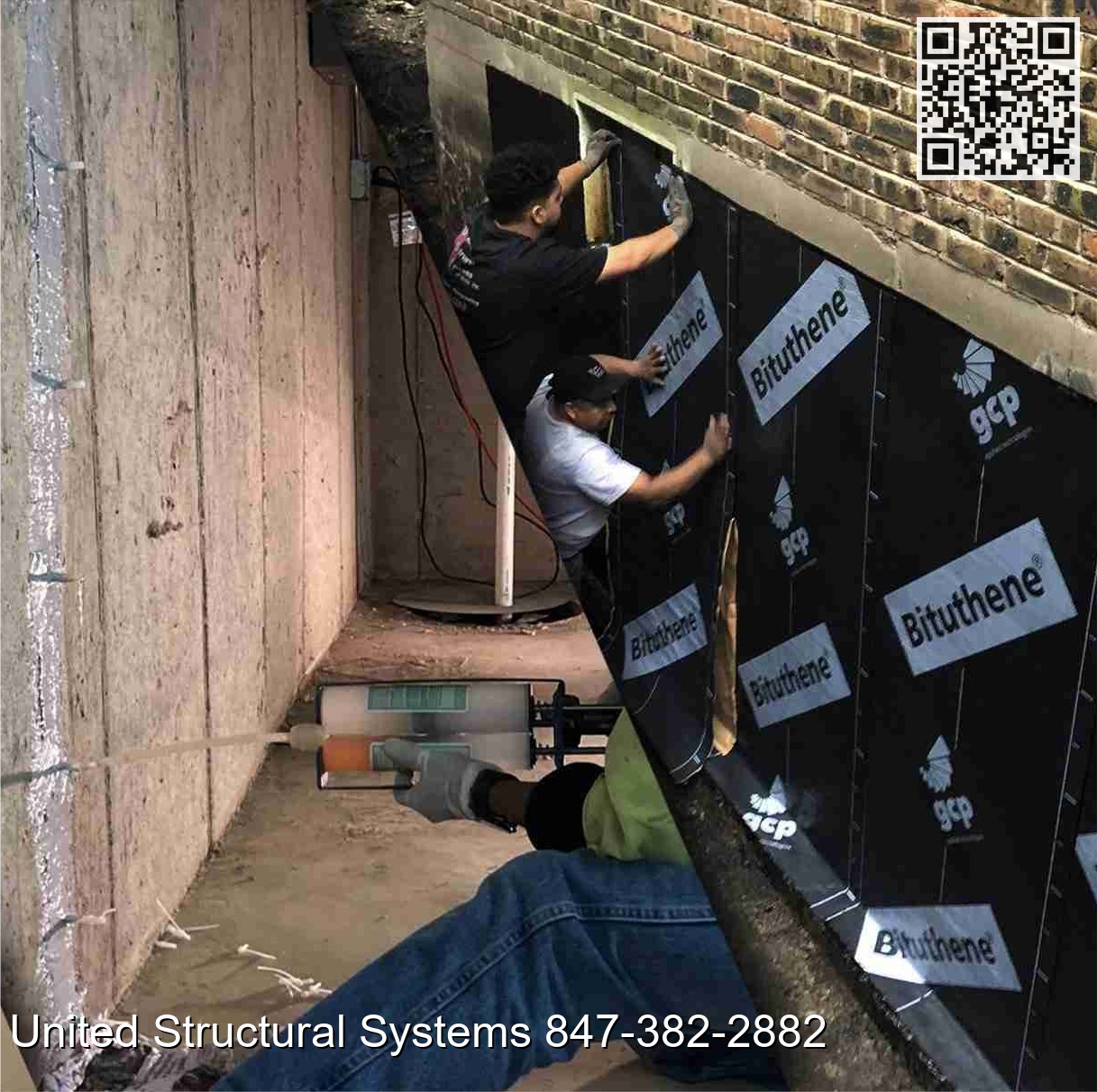
Another inaccuracy is actually stinting corrosion factors when dirts are actually assertive. Commercial foundation repair frequently takes place in more mature basements with higher chlorides from defrosting sodiums, bad water drainage, as well as changing pH. If the deterioration evaluation shows a necessity for more thick galvanization or even a sacrificial steel allocation, do not reason it away. Tieback anchors reside where you may not observe them. The cost to upsize or even define hot-dip driven parts is commonly insignificant about opening a finished room a decade later.
Misreading torque as well as the misleading comfort of a number
Torque relationship is actually a valuable resource. It is actually not a promise. The relationship variable, Kt, varies extensively along with dirt style, helix geometry, and installation technique. I have actually observed Kt values coming from as low as 6 to as high as 20 in the same city, depending upon whether the soil was actually desiccated clay-based or tidy sand. Deal with the specified torque as documentation to be verified through bunch screening, not the only aim at that matters.
Two field behaviors distort twist readings. First, if the anchor is actually certainly not straightened properly, it may bind in the red as well as develop an abrasion spike that resembles bearing resistance. The electric motor moans, the gauge climbs up, however the helices are certainly not interacting completely in the desired soil coating. Second, twist pubs as well as gauges fall out of gradation or are read rushing. If you think an untrue high analysis, pause and recheck: back down an one-fourth turn, re-advance, and also view whether twist builds gradually. An unpredictable or even sharp indication is actually a reddish flag.
On industrial work, I inquire the staff to tape-record torque every half-foot for the last 3 to 5 feet and also keep in mind any type of layer adjustments or even groundwater beads on the tool. The keep in minds take seconds and offer circumstance if a proof test underperforms. If the twist plateaued too early, the anchor might not be actually profound enough or the helix collection is unsuitable. Catching that before cutting off makes all the difference.
Anchors put in the inappropriate ground horizon
Tiebacks obtain capability from the coils bearing in proficient ground beyond the energetic wedge responsible for the wall surface. Getting past that wedge is actually as considerably a geometric concern as a depth problem. A regular mistake is striving depth rather than projecting the helix site along the true installment angle.
On a preserving wall, the energetic wedge may expand 0.6 H to 0.8 H behind the wall, depending upon backfill and also drainage. If you put in at a superficial angle to prevent electricals, you may find yourself along with a lengthy support that still properties within that wedge. The end result is actually a tieback that assesses well at low bunches but creeps during the course of grip periods or even programs extreme lock-off reductions over the first couple of weeks.
Always plot the support center on the section pulling along with the wedge limit, electricals, and also basement slabs. When allowance compels a shallow angle, incorporate duration and also choose a helix configuration made for the dirt beyond the block, certainly not the common ground profile page. If the geometry will not allow you to hit proficient ground without intersecting an electrical or even easement, this is where alternative systems like micropiles or commercial resistance pile installation may carry the bunch through tensioned braces or even internal walers.
Overlooking groundwater and also periodic changes
Water is actually the quiet saboteur. Saturated dirts lessen helpful anxiety and, through extension, anchor capability. Delicate grounds that appear stiff in overdue summertime can behave like slick goo in spring. A tieback that secured off at 60 kips in October could creep under the exact same tons the complying with April if the water level rises in to the helix zone.
Simple checks help. Keep in mind water gloss on spoil, examination close-by sumps, and also record the date relative to moist times. When unsure, plan for a conservative Kt as well as larger helices or even create a testing process that features a longer hold time to notice creep. On inner parts, take into consideration momentary dewatering in the course of installment so you may seat coils effectively. If persistent high groundwater is present, corrosion rises and so does the worth of isolation sleeves near the wall surface to lessen prospective infiltration courses via the penetration.
Sloppy placement and also poor bracing in the course of install
The best design can easily not rescue an inadequate installment pose. Tiebacks requirement positioning in 3 dimensions: effective slant to converge the bearing level, right azimuth to avoid utilities, as well as straight entry that avoids eccentric launching of the wall relationship. I have found teams handhold a drive head to string around a pipe. The anchor wandered, cut into block centers, and also kept a pointed opening. The wall structure plate eventually suffered from irregular contact, concentrating stress and anxiety and also spalling masonry.
Rig up a simple quick guide framework. Also a plyboard template along with a steel sleeve will certainly keep the starter segment real. For longer supports, a midspan assistance near the wall assists stop bending the shaft while twist is applied. Bending during installment may decrease the steel's residual ability as well as appear eventually as a brittle failure under weight testing.
Underestimating wall surface components and payload transfer details
Tieback ability carries out certainly not live just in the soil. The connection issues. For masonry or even hollow-core walls, bearing plates need sufficient measurements as well as occasionally compression shows off to spread out lots. In older concrete, carbonation and also rebar oxidation can make near-surface concrete weaker than the initial sketches advise. If home plate attacks right into delicate component, you will view an exam drop that looks like anchor creep yet is in fact wall crushing.
Pay focus to the blockout dimension, embedment of any sort of couplers or sleeves, and the demand for cement responsible for home plate. In assertive settings, define protective hats and sealants around the seepage to decrease water transfer. A leaking infiltration invites freeze-thaw damages as well as future foundation crack repair migraines, particularly in office basements with drywall finishes.
Skipping or even abbreviating proof as well as performance testing
Time tension kills great screening. On little jobs, the urge is actually to proof test an example as well as carry on. That is high-risk when soils differ all over the wall surface or even when anchor slants vary because of utilities. A straightforward program goes a long way: verification exam every support to a minimum of 1.25 opportunities the style lots, secure at top for a minimum of 10 minutes, as well as path action at each increase. For important structures, include a few functionality examinations to 1.5 to 2.0 opportunities concept bunch along with longer hold durations to assess creep.
Watch the tons tissue as well as dial scale all together. If the tons holds and activity boosts, that is creep. If the lots goes down without notable displacement, examine the port and also assesses just before condemning the support. Always keep a calmness, to-do list mindset. Document ambient temperature, given that thermal impacts on the jack and steel can trick brief tests.
Ignoring constructability in the concept phase
Designers occasionally point out anchor sizes and also perspectives that go through properly in program yet ram fact. Inner parts rows, ductwork, as well as property lines limit rig placement. On a strict urban web site, you may need to have a low-clearance ride head, shorter starter parts, as well as organized extensions. That decreases production as well as increases the per-anchor price. If the routine does not accept that, quick ways slip in: lessened embedment, transformed angles, insufficient extensions.
Bring the installer into the talk early. An industry stroll along with the building developer and geotechnical designer commonly produces smarter details: changeable walers, alternating anchor spacing, or mixing commercial helical pile installation below the piece along with a tieback unit to discuss bunches. I have made use of hybrid approaches where tiebacks deal with sidewise while helical piles or even protection heaps sustain verticals coming from interior framing. The choice may be over-stressing a single body to do each jobs.
Overreliance on one body when an additional matches better
Helical tieback anchors sparkle in lots of circumstances, but not all. In extremely heavy gravels as well as cobbles, the coils may refuse before getting to design intensity, as well as the torque called for threats turning the shaft. In those soils, micropiles or drilled tiebacks may be actually extra reputable. If a sound restriction protects against percussive exploration for micropiles, you may in some cases combine techniques: make use of helical anchors where greats control as well as switch to micropiles in cobble regions. Being actually firm regarding unit devotion is actually a mistake.
Similar reasoning uses when a wall needs to have both upright as well as lateral help. Office micropile installation can easily supply pressure as well as compression along with very little vibration when the internet site is sensitive. Commercial resistance pile installation works properly for upright bunch transfer where there is actually bad above open space. Picking the best tool is part of doing commercial foundation stabilization responsibly.
Neglecting corrosion defense and long-term maintenance
Tiebacks usually sit in wet backfill along with salts, fertilizers, and periodic hydrocarbon spills. Moderate steel is going to go through over years. When the task counts on a long service life, indicate duplex protection where warranted: hot-dip galvanized steel blended with epoxy finish or cement encapsulation where codes demand it. On some internal projects, I have made use of plastic isolation sleeves along bum rap near the wall to minimize galvanic coupling to inserted rebar.
If a structure's maintenance program dismisses the drainage and surface area conditions above the anchor region, capability degrades. Promote owners to maintain gutters, downspouts, as well as beneficial certifying. A great deal of structural foundation repair begins along with water, not steel. It is unglamorous recommendations, however it stops call-backs.
Cutting corners on documentation
The fastest pathway to disputes is actually unstable documents. Daily records that tape torque-depth profile pages, travel head style as well as calibration day, ground observations, and also verification exam leads create a straightforward past. Photographes of each anchor location just before and also after install, including the wall surface plate and sealant, return when a future lessee remodels as well as asks what is behind the drywall.
For commercial ventures along with finance companies or even social lapse, clean documentation velocities commendations as well as payouts. It likewise allows the developer of record to adjust concepts on the fly with confidence, as opposed to stopping work for a complete redesign when a few gradation anchors would certainly suffice.
Overlooking the property's international behavior
Engineers occasionally review side restraint alone. If the wall surface would like to relocate due to worldwide resolution, a tieback will cooperate that story. When the slab loses due to soft fill, tiebacks attach a moving wall to a relocating flooring, and brand-new splits seem somewhere else. In those instances, combining tiebacks along with helical piles or even micropiles to re-level as well as assistance interior beams generates a dependable unit. Commercial foundation repair is seldom a single-thread problem. A brief building review of bunch pathways can catch mismatches where a tieback will be inquired to accomplish more than stand up to lateral earth pressure.
Practical checkpoints that protect against most problems
A team foreman as soon as told me he preferred a five-minute ritual at the start as well as end of each anchor. He was right. It reduced our rework price by one-half on a busy city project. These are actually the intoxicative actions that matter most.
- Before install: confirm position as well as azimuth along with a basic jig, validate ground assumptions versus any probe or even prior supports, inspect torque machinery and disk head stress, and verify equipment handy matches the submittal. During put up: document twist every feet, decelerate with assumed bearing coatings, maintain bum rap braced near the wall, as well as stop if torque spikes unevenly to re-evaluate. After install: remove at the appropriate projection, tidy the bearing area, put up home plate level, evidence test to the program along with assessed holds, and also close the infiltration against water.
Keep it straightforward as well as regular. Many commercial teams can apply this without transforming the schedule.
When tiebacks converge with various other remedial work
Complex ventures rarely include one exchange. Waterproofing, utility movings, and indoor fit-outs overlap along with support work. The tieback seepages need control with membrane layers and also protection. If a blindside membrane layer appears responsible for a new wall structure, pre-plan sleeves as well as tapes. Correlative with waterproofers on primers as well as sealers suitable along with driven steel. Nothing at all strains client relations like a brand new crack mapped to a badly sealed off support sleeve that traverses a membrane.
Foundation crack repair service frequently why commercial foundation repair is important surface areas in tandem with lateral stablizing. Firming up a wall structure along with tiebacks may close splits, but it does not repair them. Epoxy shot or even urethane grouting might be needed to have, relying on whether the crack is actually structural or even merely a water road. Series matters: stabilize to begin with, then restore splits, then bring back surfaces. If settlement deal provided, include helical piles or micropiles as needed to deal with the vertical component.
Training the team to read through the ground
Technical specs can certainly not substitute field intuitiveness. The most effective installers have a sample of just how the torque need to create as well as what various grounds scent as well as resemble. Damp, natural stuffing possesses a sour stench and smears; tidy sand really feels gritty as well as drops off the tool in completely dry grains. The instant a staff discovers to correlate these sensory hints along with torque logs and test end results, quality improves.
Invest a few hours at the start of a job to calibrate. Put up a number of test anchors, log meticulously, as well as compile the group around the evidence test. Speak via what the amounts mean. If you also put in helical piles, resistance stacks, or even micropiles, portion trainings all over units. The ground performs certainly not care what the product is called. It responds to efficient stress and anxiety, water drainage, and density.
Common failing tales, and what they teach
A mid-rise auto parking framework had actually an inclined basement wall surface as a result of years of inadequate water drainage. The layout asked for helical tiebacks along with pair of 12-inch helices. The team installed to torque however locked off at 50 kips and also found two to three sixteenths of an inch of motion throughout the 10-minute hold. The belief was actually soft clay creep. The genuine cause was the wall Commercial Helical Pile Installation plate bearing on a spalled cement face. The moment we broke as well as patched the face with a high-strength repair mortar and also upsized home plate through 25 per-cent, tests passed along with low action. Lesson: certainly not all "support motion" remains in the ground.
On an additional venture, a famous brick front called for tiebacks installed coming from the inside by means of a slim cellar corridor. The driver might not sustain the pointed out 15-degree down slant, thus he settled for near-horizontal. The supports practically arrived at the design span, however the coils sat inside the energetic wedge. Within three months, straight gaps increased near the tieback elevation. We switched out the shallow anchors with a mix of much deeper tiebacks and also a handful of internal micropiles with a steel waler. Session: geometry defeats depth when it concerns energetic wedge avoidance.
A third case involved commercial helical pile installation on internal columns paired with tiebacks along a load-bearing wall. The stacks went properly, but the tiebacks coped coatings of gravel. Torque surged unpredictably, and a shaft twisted. Shifting to a punched, grouted tieback with a little turning rig for that zone conserved the timetable. Session: perform not require a helical option by means of cobbles when an alternate is actually available.
Where standards typically mislead
Several regular specs include blanket torque-to-capacity connections and generic grip times. They are useful starting points, certainly not gospel. In natural soils, creep habits matters much more than peak verification tons. In granular grounds, the capacity is more conscious reliable tension and drain. If the specification performs certainly not discuss seasonal water table changes or even corrosion classification, promote an addendum.
Similarly, some submittals neglect components grades, thread being compatible, and also wall surface plate monotony. If home plate bends under load, it will certainly relax when you take out the port, triggering disappointing lock-off market values. A somewhat more thick plate or a support rib is a small change that produces expected results.
Bridging to surrounding bodies without confusion
Clients usually listen to a thicket of terms: helical pile, helical tieback, resistance pile, micro pile, micropiles, tieback anchors, helical anchors. In simple phrases, stacks largely take care of vertical lots, tiebacks take care of lateral tons in strain. Helical piles as well as helical tiebacks share components, however their geometry and relationships contrast. Protection piles are actually mounted in versus an establishment to establish capability through end bearing and rubbing, helpful when overhead is actually confined. Micropile installation includes punched, grouted, usually steel-reinforced components that may take tension as well as compression in tough soils.
On commercial foundation stabilization jobs, mixing systems is actually certainly not a breakdown of planning, it is actually usually the sign of an adapted solution. A cellar that possesses each sidewise and upright trouble might need to have helical tiebacks for the wall structure as well as helical piles under interior beams. If cobbles prevail, micropiles may substitute helicals. The most intelligent teams recognize each body's sweet location and also limits.
Final thought and feelings from the field
Most expensive oversights in commercial helical tieback anchor installation track back to avoidable options: depending on incomplete subsurface information, pressing a one-size-fits-all helix collection, allowing torque readings without circumstance, or even missing strong testing. Good practice is actually certainly not complicated. It is a practice. Validate the ground, pick geometry to match, set up with positioning technique, test truthfully, and paper completely. When the web site asks for a various technique, prepare to pivot to micropiles or protection heaps as opposed to doubling adverse a battling method.
Do those points constantly as well as tiebacks quit being actually a gamble and also begin acting like the dependable resources they are for commercial foundation repair and structural foundation repair. The wall stays put, the customer lodges happy, and you spare the budget the part of the venture that appears in photographs rather than behind drywall.