Commercial web sites hardly ever get to select ideal ground. Urban infill jobs wedge in to slender plots versus residential or commercial property collections as well as utility passages. Country retail pads cut into sloping landscapes to gain exposure coming from the motorway. Medical center growths climb ridge pipes to always keep facilities on one university. In each instance, the layout team inherits a pitch that needs to stay put, also as digging, brand-new loads, and also water patterns attempt to move it. Helical tieback anchors, utilized attentively, provide proprietors a trustworthy means to hold those slopes in location without major disruption to recurring operations.
I have put in as well as designed tieback devices in grounds that ranged coming from wet residues along stream corridors to thick antarctic tills that think that concrete. The procedure has actually matured right into an expected resource for commercial foundation stabilization. What complies with is actually certainly not a primer implied for the classroom, but somewhat a field-tested guide: when helical tiebacks make good sense, what they inquire of your web site, exactly how to blend them with helical piles as well as micropiles, and also exactly how to always keep risk in check.
What a helical tieback carries out that a gravitation wall cannot
A gravitational force wall surface resists activity with its own weight and also abrasion at the bottom. That operates if you possess straight area for a large ground as well as unyielding dirt under. Several industrial progressions do certainly not. A helical tieback anchor moves side forces coming from the wall or pitch deal with back in to secure dirt strata, at times 20 to 60 feet behind the failing degree. The support threads right into the ground with low spoil, after that carries bunch through the helix bearing layers as well as the steel pole in tension.
The variation in footprint is actually impressive. I have actually braced a 20-foot-tall slice along with a row of soldier piles and tiebacks while staying completely inside a 6-foot-wide job area, away from web traffic as well as utilities. Doing the exact same work as a gravitation wall would have consumed a swath of the internet site, compelled electrical movings, as well as chewed full weeks off the schedule.
Where helical tiebacks shine on business sites
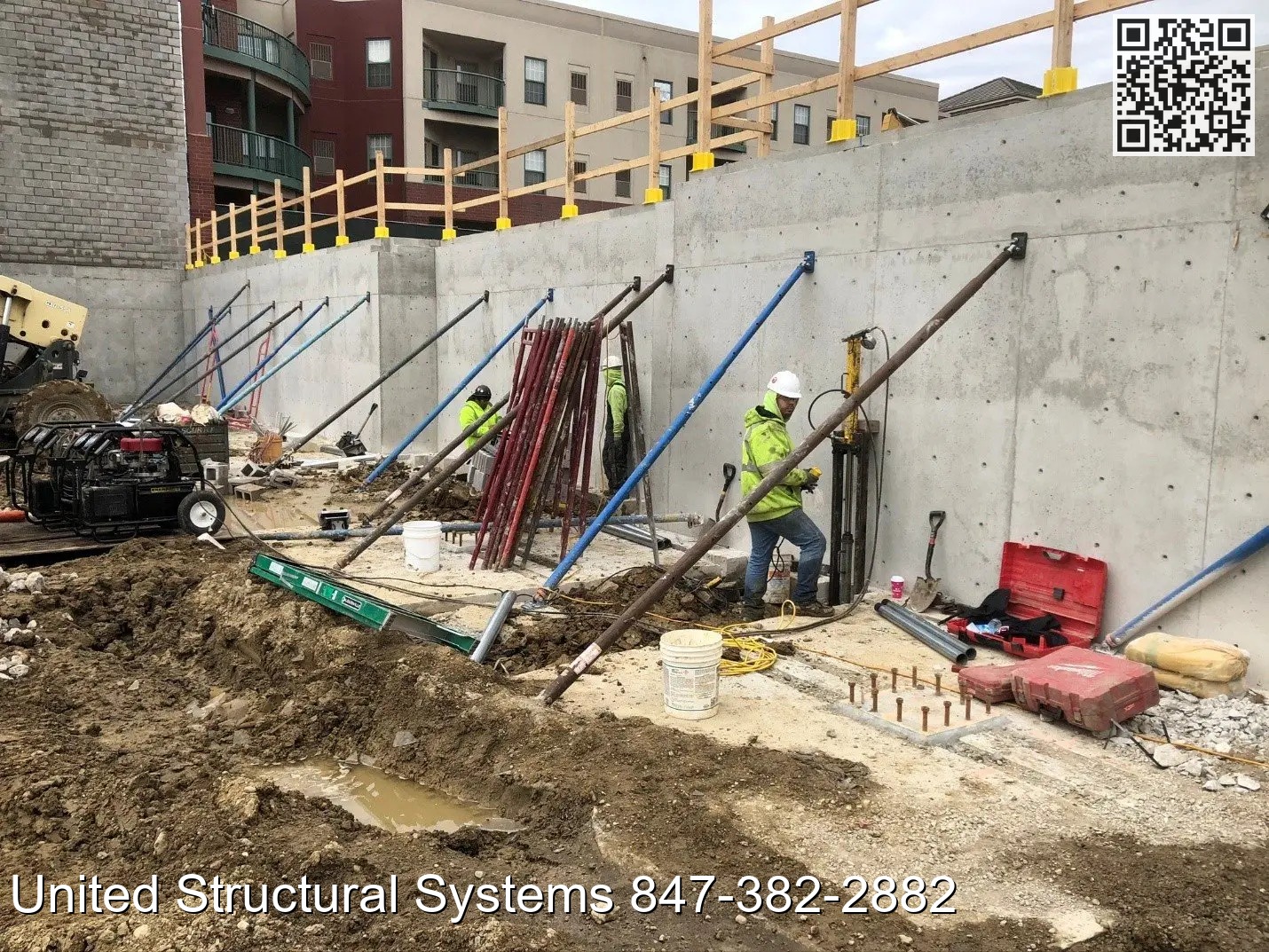
Helical tiebacks are actually quiet, quick, as well as mobile. They put in with conventional hydraulic torque electric motors on backhoes or skid-steers, therefore you can easily operate within fenced retail lots or healthcare facility courts without exclusive cranes. The device is effectively matched to:
- Temporary excavation assistance for below-grade car parking or even utility vaults adjacent to residential property lines, where right-of-entry is actually minimal and also tiebacks must be actually drilled under surrounding packages without distressing them. Permanent slope stabilization responsible for office properties or even at the foot of packing docks where additional charge tons keep growing. Retrofits on growing old retaining wall structures, where the structures is actually sound however gliding or even overturning variables of safety have actually worn away along with adjustments in drainage or even added backfill.
An anchor pattern may be very closely modified to adjustable dirt levels. If a boring presents 8 feets of fill, 12 feets of soft sand silt, and then a thick sand layer, the staff can turn down swiftly via the top levels as well as cultivate load only where size is reliable. That amount of medical control is actually harder with drilled tiebacks, which can overbreak or even call for covering in the upper soils.
The mechanics that matter: helices, twist, and bond length
A helical tieback anchor is actually more than a steel screw. The style relies upon predictable partnerships between setup twist and also best ability, confirmed through load exams. For commercial helical tieback anchor installation, I talk to the crew main to log twist every feet. A regular twist account, rising as helices permeate denser grounds, shows excellent engagement. Quick torque decreases suggest voids, clutter, or lensing sands that need interest or lengthening.
Helix arrangements vary. A common setup for pitch stablizing makes use of two to 4 coils, 8 to 14 inches in size, spaced along the top section to lessen communication. The target is actually to place the helices beyond the possible breakdown area, with a minimum of a couple of coil dimensions of undisturbed ground over and beneath the array. In consistent sands and also silts, that typically suggests anchor lengths of 25 to 45 feets. In layered tills or even timeworn stone, you might need to have 60 feets or additional to surpass joints that can slip.
Bond duration is actually a phrase our team use a lot more along with grouted anchors, but the suggestion still applies. The coils establish load in the bearing areas, and also the shaft lugs tension back to the wall structure. Round-corner straight poles work effectively in thick grounds where tension controls, while much larger water pipes stems deal with bending over and distorting during the course of setup and lasting side results. On tasks along with high corrosion capacity, we indicate hot-dip priming or even sacrificial fullness, at times both, originated from a 75- to 100-year design lifespan calculation.
Slope geometry as well as the failure area, in plain terms
Every pitch possesses a failure surface concealed within it. For an approximately homogeneous dirt, the form is typically a circular arc that begins above the foot as well as arcs up through the incline. When we stabilize along with tiebacks, our team think that surface cautiously, at that point steer the anchor via it. The support angle of inclination usually varies coming from 10 to 25 levels below parallel. Shallower angles optimize the bar arm and also lessen vertical uplift parts. Steeper slants assist thread with hurdles or reach much deeper, more powerful layers.
On a common 2H:1 V slice responsible for a retail pad, a 15-degree incline functions well. Our team put in rows at upright space of 4 to 6 feets, beginning a few feet over the slice foundation. Parallel spacing usually properties in between micro pile installation methods 6 and 10 feets, governed through structures hardness and also worldwide security inspections. You can firm up the grid near sections or where surcharge tons focus, like under a travel alley or even trash compactor slab.
Choosing between helical tiebacks, micropiles, and also resistance piles
Commercial foundation repair work is certainly not a one-tool exchange. For incline stablizing alone, helical tiebacks commonly hammer choices for velocity and expense in soils devoid of cobbles. Yet commercial helical pile installation, commercial resistance pile installation, and also commercial micro pile installation all have a place in the exact same project.
Micropiles, or micropiles if you favor the dictation, come into play when the web site brings hefty upright bunches alongside side demands. I have stabilized a slice supporting a medical office along with helical tiebacks, at that point assisted the near-edge column line along with micropile installation to steer clear of overstressing the existing spread footings. Micropiles build ability through grout-to-ground connect as well as improving, so they tolerate blended strata and also little boulders much better than helices.
Resistance piles, likewise called press piers, sparkle under existing structures that have settled. If pitch activity has undermined a slab-on-grade store, our company may make use of resistance pile under the boundary or even indoor grounds for structural foundation repair, while the incline itself receives helical anchors. The heaps take upright load by responding versus the structure, hoisting each pier to an intended pressure as well as lock-off. Tiebacks take the side lots through the slope. The units go well with one another.
Helical stacks are actually the close cousins of tiebacks. They bring vertical compression or even pressure, certainly not lateral directly. On web sites where a retaining wall surface or even sheet stack stem may certainly not bring tieback bunches quickly, our experts use battered helical piles to discuss the effort. In seaside markets where deterioration operates higher and also groundwater rises seasonally, a blend of helical piles as well as helical anchors, both driven, can easily provide years of service if the style accounts for reduction of section.
What a day in the business appears like
I remember a distribution center expansion where the brand new truck courthouse called for partitioning a loess incline. The geotech hailed the clayey residue as collapsible when moist, along with an undrained shear toughness near 800 psf at mid-depth. Digging limits pressed hard onto the residential property line. Our answer: a soldier pile and also lagging wall surface, supported along with 2 rows of helical tiebacks.
We mobilized with a 12-ton bulldozer matched along with a 12,000 ft-lb twist electric motor and a skid-steer with a 7,000 ft-lb head for gain access to behind stationed trailers. The staff augered soldier heap openings, set W-sections, and also backfilled with lean interfere the morning. By mid-day, our experts were actually spinning in 1.75-inch straight ray tiebacks at a 15-degree inclination. Intended best capacity was 60 kips every anchor, along with a style load of 30 kips as well as an aspect of protection of 2. Our team attacked 7,500 to 8,500 ft-lb of installment torque in the dense silt, which correlated to 60 to 70 kips on the manufacturer's chart. Our team proof-tested 10 percent of the anchors to 1.5 times load. None crashed to hold.
The wall rose in 3 times, tiebacks consisted of. Tractor-trailer traffic certainly never stopped. Make an effort performing that along with a pierced tieback body that requires grout cure opportunity as well as massive coverings in collapsible soils.
Drainage, the silent co-star
No support can easily rescue an incline if water keeps deteriorating its own stamina. On office tasks, the rooftop drains, website scuppers, and underslab pipes that seem trivial often create the greatest headaches. I inspect every website for centered flows that attacked the slope face. A tidy stabilization package deal are going to add weeps responsible for lagging, a drain mat or even fireplace drainpipe, and also a method to keep drainage out of the backfill. In clay-baseds, I seek perched water and cut in parallel empties if the soils allow all of them. In lumpy fills up, I alleviate separated moist wallets as indications of defective utilities.
Anchors capably resist stationary loads. Drainage keeps those bunches from increasing eventually. Tiebacks as well as helical piles are mechanical devices, certainly not magic.
How engineers check the arithmetic without getting rid of the schedule
The analysis begins with a limit balance design of the slope and any wall structure factors. Our experts readjust dirt specifications to match laboratory data and also range monitorings, then test failure areas along with and also without support powers. For the anchors, our team assume possible load-sharing among rows and also use reductions for installment variability. Our team check out use with estimated deflections at the wall structure face, which connect with delayed spaces as well as movement measurements on neighboring slabs. If our company are including supports to an existing wall, our experts evaluate the wall's rigidity and relationship capability to confirm it can easily move loads.
Load testing is actually straightforward and worth the moment. For long-term units, I specify evidence examinations on a minimum of 5 to 10 percent of anchors as well as functionality examinations on 2 to 5 percent, depending upon risk. The exam frame may be sleek, along with a response light beam and hydraulic ram connected to a set of short-lived anchor points. A well-run half-day of testing provides every person self-confidence and also usually does certainly not postpone production.
Installation particulars that divide a tidy project coming from an unpleasant one
Tieback work benefits focus to small things. I insist on guide sleeves at the wall face to maintain the inclination constant as well as to defend the structures coming from drill chatter. If our team are operating near online powers, our team pothole before each support as well as often utilize an aviator along with a non reusable pointer to affirm the pathway before turning in the helices. If torque spikes beyond devices limitations, we pause as well as revise ground assumptions, certainly not simply push more challenging as well as risk bar damage.
Grout or even no grout? Ordinary helical anchors carry out effectively in several dirts, but in loosened sands or where oxidation is actually a worry, a grouted helical support can double duty: the cement encases the shaft for defense as well as raises ability by including a bond zone around the steel. Grouted tiebacks need tremie procedures as well as interest to bleed water. They prolong the schedule through a day or 2, however the repayment is actually higher capacity and longer life, frequently essential on social projects.
Connections matter. The support head ought to bear uniformly on a steel waler or even soldier pile lip, with seating that stays away from eccentricity. For hardwood lagging, our team add steel bearing platters to circulate load. Where appearances matter, such as retail shops, our team conceal scalps responsible for home boards or even cast a slim cement skin over the structural elements as soon as lock-off is actually complete.
Integrating incline stablizing with broader foundation repairs
Slope activity hardly ever behaves alone. When it pushes preserving wall structures as well as pavements, it also moves groundworks not far away. That is actually where commercial foundation repair overlaps with pitch stabilization. If an occupant room presents drywall cracking and door imbalance, our team survey the piece and also check differential movement at pillars. Sometimes the solution is limited: helical tiebacks for the slope, shallow underpinning pads for a section column, and foundation crack repair using epoxy shot where a grade light beam has actually split however stays structurally sound.
On bigger constructs, deep foundation repair may be smarter. I have actually combined tiebacks along with commercial helical pile installation under a packing dock framework to hold brand new vertical lots caused by regrading. For another internet site, micropiles under a chiller pad guarded vibration-sensitive tools from settlement deal while tiebacks stored the nearby cut. The hybrid strategy expenses much more in products, a lot less in lasting danger, and may maintain a center running with the work.
Design life, deterioration, as well as the unglamorous paperwork
Public owners desire 75 to one hundred years away from long-term tieback anchors. Exclusive proprietors typically work out all around 50 years. Either way, the corrosion computation is actually not guessing. Our company pinpoint ground resistivity, chloride content, pH, as well as redox potential possibly. In aggressive soils, our experts define galvanization plus propitiatory steel on shafts as well as platters. For grouted anchors, cover density is checked out like a rebar particular. Where stray present is likely, near rail or even DC energy, our company take into consideration seclusion and also tracking. None of this particular is actually pricey contrasted to a failing, however it could be forgotten when schedules compress.
Documentation defends every person. Delegations report coil configurations, pole dimensions, oxidation mitigation, as well as load-testing strategies. Daily mentions track installation twist, sizes, and lock-off tons. If a case arises later on, a total record of commercial helical tieback anchor installation will definitely conserve days of argument.
Costs, productivity, and also reasonable expectations
Owners seek an amount. Expenses differ along with access, ground, as well as testing needs, however, for budgeting, long-lasting helical tiebacks on an industrial project commonly land in the range of a couple of hundred dollars per feet of anchor, featuring work and components. Creation rates can easily exceed 10 to 15 supports every day for accessible rows along with straightforward sizes. Grouting, tough gain access to, or even intricate walers decrease it down.
Comparisons to punched tiebacks commonly favor helicals on small to mid-sized work given that there is no grout cure time as well as much less spoils handling. On large tasks, economic situations of incrustation can carry punched supports nearer. Micropiles are actually usually higher per unit length but carry unrivaled flexibility in combined ground. Protection stacks are actually economical for deriving, not for incline stablizing, and must not be injected that role.
Where factors make a mistake, and exactly how to stay clear of it
I have actually observed 3 reoccuring blunders. Initially, taking too lightly exactly how water alters the incline with time. The fix is to create drainage as if it were actually an architectural component. Second, dismissing potential blockages. A singular stashed stone can easily damage shafts and also schedules. Pit, probing, as well as prepare with different anchor places. Third, insolence in torque-to-capacity correlations when dirt circumstances differ swiftly. When the torque arc appears raucous, add an exam anchor or prolong duration up until the amounts settle.
Another threat is actually relationship failure. An anchor is actually simply as powerful as the plate or waler it births against. Invest style time there certainly, and do not stint welding procedures. For high-load supports near residential or commercial property collections, I desire a registered examiner to observe essential connections.
An example process that always keeps disorder low
For a coordinations playground built on a rumbling website, the designer intended to steer clear of months of carrying as well as export. Our plan partitioned the hill responsible for the property and maintained the deal with pair of rows of tiebacks and also a thin shotcrete structures. The pattern was simple:
- Strip vegetation, rough cut the incline to within a foot of finish grade, and placed survey control for anchor rows. Drill and put up the lower row of helical tiebacks from the bench, proof-test decided on anchors, and secure off to a steel waler embedded in shotcrete pads. Finish cut, put in the upper row, add water drainage floor coverings and also weeps, as well as shoot the last fascia in two airlifts for also curing.
We maintained the work area within 12 feets of the slope, left behind truck streets open, as well as ended up in nine working days. No dewatering, no night job, and also no electrical conflicts. That is actually the kind of result helical anchors were actually created for.
How to straighten the staff: owner, engineer, and installer
The absolute best tasks combine a sensible geotechnical concept with a professional who recognizes the devices and also will tell you when the program needs tweaking. I just like a preconstruction conference with the manager's agent, the geotech, the architectural designer if a wall structure is actually involved, and also the support installer. Our team assess access paths, energy maps, examination requirements, approval criteria, and also a fallback strategy if our company satisfy unpredicted grounds. For example, our experts might acknowledge earlier that if torque drops below a limit at layout length, our experts incorporate a helix as well as 5 feet of expansion, after that retest. Decisions like that, made as soon as theoretically, save hours in the field.
Where tiebacks fit in the broader photo of commercial base stabilization
Commercial foundation stablizing is a toolkit. Helical tieback anchors handle sidewise loads in soils that are going to approve all of them. Helical piles take upright compression or even pressure along with very little use. Micropiles punch with junk dirts and hold heavy bunches where others can not. Resistance piles derive settled buildings along with very little excavation. Foundation crack repair is actually the finishing touch, securing the indicators of grief after the framework is steady again.
No singular approach is worthy of to dominate. The target is actually not to market one product, but to match operation to operation: lateral to tiebacks, vertical to piles, contortion to drain, and sturdiness to corrosion protection. If the service searches complicated theoretically, remember that in the business many of these devices mount with compact devices as well as leave a small footprint.
A quick word on codes and also permitting
Local jurisdictions vary in how they address helical anchors. Lots of defer to ICC-ES documents for products as well as capability correlations, after that ask for a closed design that shows payload situations, variables of security, and also examination methods. When supports expand under adjacent buildings, recorded easements or even permit arrangements are often demanded, although the job is actually entirely below ground and performs not disrupt the next-door neighbor. Plan for that lawful action early. For sites with visitor traffic bunches near the peak, inspection live bunch surcharges in the retaining wall surface code stipulations as well as be conservative with tiered pitches that might interact.
Final ideas from the field
I have actually depended on half-cut pitches that felt like piled memory cards, watched clouds appear, and experienced the moisture switch. That is actually when you are grateful for an unit that strings in rapidly, grabs proficient ground, as well as keeps quietly. Helical tieback anchors are certainly not fancy, however they are disciplined. They recognize the dirt you have, not the soil you long for. Used along with really good water drainage and also paired with the right deep foundation repair procedures where needed to have, they keep office web sites risk-free, phased building on the right track, and occupants not aware that everything ever before moved.
If your project features a slope that creates you tense, begin with the dirts document and also a sketch of the geometry. After that take into consideration whether a network of helical tiebacks, maybe paired with helical piles or micropiles at critical points, can easily provide you the frame you need to have. In some cases, it will certainly perform specifically that, and do it along with a lot less noise, less spoils, as well as much fewer migraines than the alternatives.